Thanks in advance,
Natalie x


Thank youI will soon try to id the plants, but as a rule of thumb I wouldn't pick any from high traffic areas to avoid pollution, pesticides, fertilizers or even dog urine! When I go to public forests I like to go further away from any paths, and the safest space is always your own or somebody you know, private garden. I am sure many people will willingly let you pick all the weeds from their garden![]()
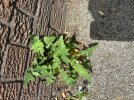
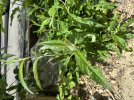
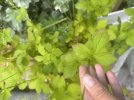
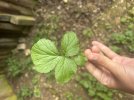
Thank you for taking the time to help1. I believe that this is a snow thistle, from the Sonchus family and safe to feed https://www.thetortoisetable.org.uk/plant-database/viewplants/?plant=209
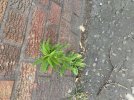
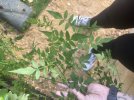
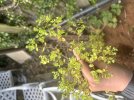
2. Not sure, perhaps seeing possible flowers would help
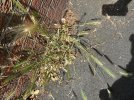
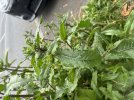
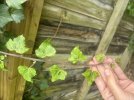
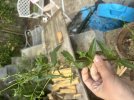
3. This is some sort of barley, which is safe to feed, but hermanns aren't really grass eaters so it is not the best weed to pick. It works better as a shelter plant, like other grasses. https://www.thetortoisetable.org.uk/plant-database/viewplants/?plant=589&c=2
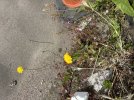
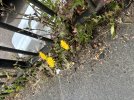
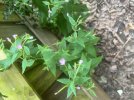
4. This is probably a hawkbit (not sure, because it is hard to see which leaves are which) from the Leontodon genus. This is also safe to feed https://www.thetortoisetable.org.uk/plant-database/viewplants/?plant=127&c=6
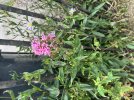
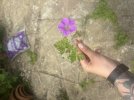
5. The pink flower in the photo is probably the red valerian, Valeriana rubra, which is also safe to feed.6. Same thing as number 4.Browse and Search the Tortoise Table Plant Database
Browse and Search the Tortoise Table Plant Databasewww.thetortoisetable.org.uk
7. Not sure, perhaps seeing possible flowers would help
8. Not sure, perhaps seeing possible flowers would help
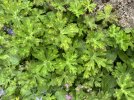
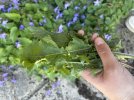
9. I believe that this plat belongs to the Geranium family, and is therefore safe to feed. Hard to say which geranium specifically without the flower, but the leaf shape is quite distinctive https://www.thetortoisetable.org.uk/plant-database/viewplants/?plant=17&c=5
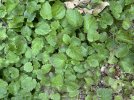
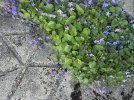
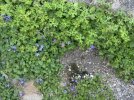
10. Not sure, perhaps seeing possible flowers would help
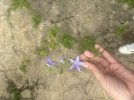
Also going back to number 10- here’s the flower for that one tooThank you for taking the time to help
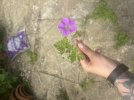
Going back to number 9- I’ve attached a picture with the flower
That is definitely geranium!Thank you for taking the time to help
Going back to number 9- I’ve attached a picture with the flower
Number 10 is then Campanula, also safe to feed https://www.thetortoisetable.org.uk/plant-database/viewplants/?plant=832&c=5Also going back to number 10- here’s the flower for that one too
Awesome, thank youNumber 10 is then Campanula, also safe to feed https://www.thetortoisetable.org.uk/plant-database/viewplants/?plant=832&c=5
Thank you again1. I am not sure of this one. It might be a Clematis of some sort, maybe a gardening variety? They are toxic and I wouldn't feed this plant. https://www.thetortoisetable.org.uk/plant-database/viewplants/?plant=95&c=4
2. I think that this is a Jasminum of some sort. If so it can be fed in moderation. https://www.thetortoisetable.org.uk/plant-database/viewplants/?plant=683&c=5
3. This is English Ivy Hedera spp. and toxic. Don't feed this one, or get it too close your tortoises enclosure. https://www.thetortoisetable.org.uk/plant-database/viewplants/?plant=341&c=4
4. This is a willow herb Epilobium spp. It contains tannins, so it should be only fed in moderation. It is actually a plant I have been trying to get rid of in my garden, beacause it is an invasive species here in Finland. https://www.thetortoisetable.org.uk/plant-database/viewplants/?plant=360&c=6
5. This is a Geum and it conatains high levels of tannins. This should also be only fed sparingly. https://www.thetortoisetable.org.uk/plant-database/viewplants/?plant=866&c=5
6. This is false caper, which belongs to the Euphorbia spp. I couldn't find info on the suitability of this specific plant, but the Tortoise table seems to list the whole family as toxic, since they contain carcinogenics and irritants. I would be cautious, and not feed it at all.
7. Same as number 4Browse and Search the Tortoise Table Plant Database
Browse and Search the Tortoise Table Plant Databasewww.thetortoisetable.org.uk
8. This is some sort of Geranium and they are all safe to feed. https://www.thetortoisetable.org.uk/plant-database/viewplants/?plant=17&c=5