UVB not a necessity???

Status
Not open for further replies.

Millerlite

Well-Known Member
10 Year Member!
Joined
Nov 20, 2008
Messages
2,667
Location (City and/or State)
Southern Calif.
UVB is necessary to all reptiles, and its healthy for them, the only thing i argue is, do they need artificial UVB. Like i said before many people dont use the bulbs and have nice looking tortoises. Dont confuse this with never having UVB because most let theres have natural sun.
 

Madkins007

Well-Known Member
Moderator
10 Year Member!
Joined
Feb 15, 2008
Messages
5,397
Location (City and/or State)
Nebraska
loogielv said:
-EJ said:
last time I looked... I thought we were discussing the necessity of UVB for tortoises. If you could cite a similar example considering a tortoise... that might be impressive.

Your example really doesn't provide evidence for the necessity of UVB outside of the point that it makes the lizard prettier.
hrmm.. you have a valid point. I would venture to argue that it's common sense that when a lizard has brighter, prettier colors, it's certainly feeling good. However that doesn't prove my point, and certainly doesn't have bearing on torts... i'll have to ponder this awhile.

I'd suggest an experiment: 2 light bulbs, one UVA/UVB with a basking spot of say...85F (27c) and then across the enclosure, a basking spot under a regular incandescent household bulb with a basking temp of closer to 32-33c. If the tort chooses the slightly cooler basking spot, then I'd say he's feeling better from the UV rays then he would from an additional 4 or 5 degrees celsius.

Perhaps i'll give this a go one day. Anyone wanna try it first?

Something similar has been done-
Anders, Ben and Moll, Dan “Do ultraviolet lights affect growth in captive turtles?” Turtle Survival Alliance, 2007 (http://www.turtlesurvival.org/2007annualmeeting/ultraviolet-affect)

While not perfect, it reveals interesting elements. When Red-ears were raised from hatching to 8 months under several light options, there was no observed difference in growth patterns. This is especially interesting considering how much sliders are thought to need UVB.

Millerlite said:
UVB is necessary to all reptiles, and its healthy for them, the only thing i argue is, do they need artificial UVB. Like i said before many people dont use the bulbs and have nice looking tortoises. Dont confuse this with never having UVB because most let theres have natural sun.

Davis, Sam, “Husbandry and breeding of the Red-footed tortoise, Geochelone carbonaria, at the National Zoological Park, Washington.” International Zoo Yearbook, 19: 50-53. 1979

This is just one of many documented reports of people, zoos, etc. raising tortoises completely indoors without UV or UVB lighting (or even UV transparent glass) that grow and reproduce in about the same way as outdoor tortoises do. This particular report is biased towards Red-foots because that is what most of my research is based on.

UVB is also going to be tough for nocturnal and subterranean reptiles.

Please understand- I AM NOT sayng UVB is bad or evil- just that it is not a miracle drug or an essential to life for every species. UVB will not fix bad Ca:p ratios, humidity levels, etc.
 

loogielv

New Member
5 Year Member
Joined
Jan 31, 2009
Messages
18
-EJ said:
The only point we are discussing is if UVB is a necessity or not. There's no doubt that it probably has benefits but it is not a need as far as tortoises are concerned.

loogielv said:
-EJ said:
last time I looked... I thought we were discussing the necessity of UVB for tortoises. If you could cite a similar example considering a tortoise... that might be impressive.

Your example really doesn't provide evidence for the necessity of UVB outside of the point that it makes the lizard prettier.
hrmm.. you have a valid point. I would venture to argue that it's common sense that when a lizard has brighter, prettier colors, it's certainly feeling good. However that doesn't prove my point, and certainly doesn't have bearing on torts... i'll have to ponder this awhile.

I'd suggest an experiment: 2 light bulbs, one UVA/UVB with a basking spot of say...85F (27c) and then across the enclosure, a basking spot under a regular incandescent household bulb with a basking temp of closer to 32-33c. If the tort chooses the slightly cooler basking spot, then I'd say he's feeling better from the UV rays then he would from an additional 4 or 5 degrees celsius.

Perhaps i'll give this a go one day. Anyone wanna try it first?

well I would still argue a point that anything that has obvious benefits would be a necessity. you could feed a tort dog food for several months before pyramiding would occur. would that mean that it's acceptable? Or that a low protein diet is not a necessity? I wouldn't think so.
 

-EJ

New Member
10 Year Member!
5 Year Member
Joined
Jan 10, 2008
Messages
983
Location (City and/or State)
Georgia
For the sake of the average keeper or the keeper who is totally lost by this thread...

A necessity is a component that the animal cannot do or survive without... it is a need... a must have.

UVB is not a need. Tortoises can be provided with other sources to aid in the synthesis of calcium... So... uvb can be done without... pretty simple point.
 

Kristina

Well-Known Member
10 Year Member!
Joined
Dec 18, 2008
Messages
5,383
Location (City and/or State)
Cadillac, Michigan
-EJ said:
For the sake of the average keeper or the keeper who is totally lost by this thread...

Tortoises can be provided with other sources to aid in the synthesis of calcium...

It might also be helpful for some to list those sources :)

Kristina
 

-EJ

New Member
10 Year Member!
5 Year Member
Joined
Jan 10, 2008
Messages
983
Location (City and/or State)
Georgia
There is actually only one source but it can be found in a few forms... vitamin D. A little internet searching should reveal those sources.

kyryah said:
-EJ said:
For the sake of the average keeper or the keeper who is totally lost by this thread...

Tortoises can be provided with other sources to aid in the synthesis of calcium...

It might also be helpful for some to list those sources :)

Kristina
 

nrfitchett4

New Member
5 Year Member
Joined
Jan 18, 2009
Messages
202
how about:
1. Natural sunlight (best)
2. UVB light (probably second best)
3. Supplements

did I miss any?
 

Millerlite

Well-Known Member
10 Year Member!
Joined
Nov 20, 2008
Messages
2,667
Location (City and/or State)
Southern Calif.
i dont know if there is proof to say if UVB light is better then supplements. To many people use 2 and 3 and have good results.
 

Madkins007

Well-Known Member
Moderator
10 Year Member!
Joined
Feb 15, 2008
Messages
5,397
Location (City and/or State)
Nebraska
nrfitchett4 said:
how about:
1. Natural sunlight (best)
2. UVB light (probably second best)
3. Supplements

did I miss any?

4. Diet. D3 is available from things like organ meats, oily fish, eggs, etc. in moderate levels, and in almost all meat in lower levels. D2 is available from mushrooms and fungi in high levels (very high in some fungi), and in lower levels in many other plants.

For most biological processes in most animals, any vitamin D seems to work, although D3 works 'better' than D2, so it takes a little more D2 to accomplish the same results.
 

loogielv

New Member
5 Year Member
Joined
Jan 31, 2009
Messages
18
-EJ said:
For the sake of the average keeper or the keeper who is totally lost by this thread...

A necessity is a component that the animal cannot do or survive without... it is a need... a must have.

UVB is not a need. Tortoises can be provided with other sources to aid in the synthesis of calcium... So... uvb can be done without... pretty simple point.

whoa whoa whoa, a "necessity" as YOU SEE IT, is something an animal cannot do without. a "necessity" as I see it, is something MY ANIMALS cannot do without.

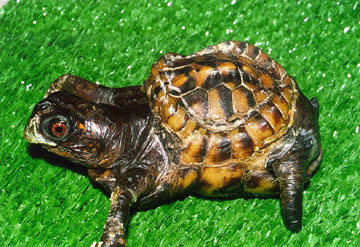
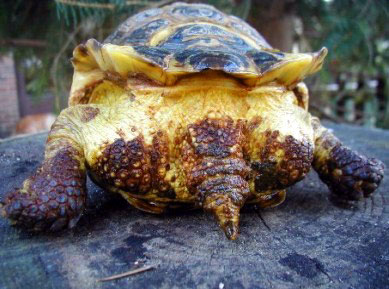
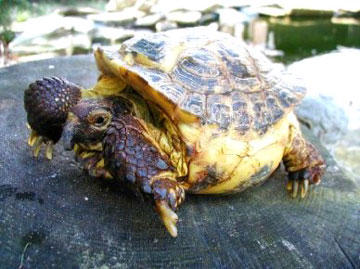
I could literally feed a tortoise dog food for years AND YEARS and he wont die, but then again he'd look like the following:

webdiet8.jpg


or

webdiet7.jpg


or even

webdiet22.jpg

webdiet21.jpg


so by your definition, a low protein diet is not a "necessity" but by my definition, it most certainly is.

however your point that what UVB provides (vit d3 and thus better calcium binding) can be achieved through other means does prove that UVb is not a necessity, as long as the d3 is provided elsewhere. or the end result (more calcium) is achieved. You could easily say calcium dusting isn't a necessity either, or even a high calcium diet, as long as the calcium is being provided elsewhere.

for the sake of the average keeper, as you put it, UVB is easiest way route to provide additional d3 (and thus calcium) so by that token I'd still say it was a necessity

I look forward to your reply. I am enjoying this wholeheartedly. thanks

pics from tortoise trust web: http://www.tortoisetrust.org/articles/webdiet.htm


Madkins007 said:
nrfitchett4 said:
how about:
1. Natural sunlight (best)
2. UVB light (probably second best)
3. Supplements

did I miss any?

4. Diet. D3 is available from things like organ meats, oily fish, eggs, etc. in moderate levels, and in almost all meat in lower levels. D2 is available from mushrooms and fungi in high levels (very high in some fungi), and in lower levels in many other plants.

For most biological processes in most animals, any vitamin D seems to work, although D3 works 'better' than D2, so it takes a little more D2 to accomplish the same results.
I will admit up front that I am a little ignorant in the d2 area, however it is my understanding that d2 is basically worthless to a reptile. lemme see if i can find the quote i know of...

found it, but it's for beardies. the point remains i believe:

Many calcium supplements and multi vitamins contain vitamin D3. Vitamin D3 (cholecalciferol) is essential to calcium metabolism, and is made in the Beardie's skin by contact with sufficient UVB wavelengths. Plants contain another type of vitamin D, called D2 (ergocalciferol). Vitamin D2 is not nearly as efficient (in fact it is really worthless) at metabolizing calcium, hence the need for D3. Research suggests that Beardies may not utilize much or any of the D3 they ingest (as given in a vitamin supplement), only that made by the UVB-skin interaction. Therefore, buying a calcium supplement that contains D3 is not necessary for the calcium metabolism. Products such as Solar Drops and Moon Drops are a waste for Beardies as it misleads people who think that they are making up for the lack of sun or other proper UVB access, and harms the Beardie who ultimately suffers from metabolic bone disease from inadequate calcium being metabolized.

It doesn't quite say WHY d2 is worthless, but does go into d3 and all that.


edit: i want to express again, the above quote is for bearded dragons. I believe that d3 dusting is essential in tortoise care, and whether it is for lizards is up in the air in my opinion
 

nrfitchett4

New Member
5 Year Member
Joined
Jan 18, 2009
Messages
202
I've read the same thing about igs and d3 which is why I think it is better just to let them have a uvb or natural sunlight. Why mess with nature if you don't have to?
 

-EJ

New Member
10 Year Member!
5 Year Member
Joined
Jan 10, 2008
Messages
983
Location (City and/or State)
Georgia
I've read the same thing about D2 and D3 in reptiles.

As far as the TT propaganda goes... I'll not go there... maybe just a little... those photos are use for the viv argument... for the protein argument... and not the UVB argument... that's gotta make a person wonder.

Needless to say... many people have raised wonderful looking animals without the use of UVB bulbs... so... they are not a necessity.

I do hope the new keeper is not snowed by the scare tactics of the propaganda of some organizations/individuals.

nrfitchett4 said:
I've read the same thing about igs and d3 which is why I think it is better just to let them have a uvb or natural sunlight. Why mess with nature if you don't have to?
 

loogielv

New Member
5 Year Member
Joined
Jan 31, 2009
Messages
18
-EJ said:
I've read the same thing about D2 and D3 in reptiles.

As far as the TT propaganda goes... I'll not go there... maybe just a little... those photos are use for the viv argument... for the protein argument... and not the UVB argument... that's gotta make a person wonder.

<snip>

I do hope the new keeper is not snowed by the scare tactics of the propaganda of some organizations/individuals.


You sorta skimmed over my response and didn't really address anything but "scare tactics". I find it hard to believe you'd say showing people what an improper diet can do to a tort would be "scare tactics".

I personally would hope the new keeper is not snowed by the sales tactics of a local pet store trying to off load as many torts as possible before his next shipment.

And yes, my pics are for the protein argument, which I stated, and I was not arguing the use of protein. I argued that a high protein diet would not kill a tort, and thus by your definition is not a "necessity".

-EJ said:
Needless to say... many people have raised wonderful looking animals without the use of UVB bulbs... so... they are not a necessity.

I think that is the point of this thread. It isn't needless to say, but actually needful to say. Please provide proof of these individuals raising torts long term with no ill effects. "Pics or it didn't happen" so to speak.
 

Yvonne G

Old Timer
10 Year Member!
Platinum Tortoise Club
Joined
Jan 23, 2008
Messages
95,394
Location (City and/or State)
Clovis, CA
I have no scientific proof, but it is my opinion that the UV rays from the sun bounce around the environment and you don't have to be actually "in the sun" to reap their benefits. I have NEVER used a UVB bulb. All of my tortoises are outside, even the ones that are in "indoor" habitats. I have the hospital habitats set up on my car port and on sunny days I prop open the lids. And even though the sun doesn't actually shine inside the open lids, I feel the animals inside are getting the beneficial uvb from the sun. I don't have any soft-shelled tortoises. The tortoises in my own collection that I have raised from hatchlings are all fine and normal, with the exception of a little leopard that is now 3 years old and a bit pyramided. But I believe his pyramids are from being kept on oat hay pellets and dry, rather than lack of uvb.

I don't believe you need to provide your tortoise a uvb bulb as long as he is able to be outside for a bit every week.

Yvonne
 

loogielv

New Member
5 Year Member
Joined
Jan 31, 2009
Messages
18
emysemys said:
I don't believe you need to provide your tortoise a uvb bulb as long as he is able to be outside for a bit every week.

Yvonne

I would agree with this. I would think just the occasional, indirect UVB from the sun would be far greater than constant "UVB" from a bulb.
Of course, that would also stand to reason that UVB is still needed
 

Millerlite

Well-Known Member
10 Year Member!
Joined
Nov 20, 2008
Messages
2,667
Location (City and/or State)
Southern Calif.
thats what i been saying the whole time. There are people that use no UVB bulbs and still have healthy tortoises.
 

loogielv

New Member
5 Year Member
Joined
Jan 31, 2009
Messages
18
Millerlite said:
thats what i been saying the whole time. There are people that use no UVB bulbs and still have healthy tortoises.

the title of this thread is "UVB NOT A NECESSITY?"

Not "UVB BULBS NOT..." so we were arguing whether UVB is a necessity and the last person was stating that UVB bulbs weren't needed because their torts get plenty-o-real UVB.
 

Madkins007

Well-Known Member
Moderator
10 Year Member!
Joined
Feb 15, 2008
Messages
5,397
Location (City and/or State)
Nebraska
D2 and D3- humans can use either, although D3 is processed more efficiently. (Sources: company dietitian, and articles like http://ods.od.nih.gov/factsheets/vitamind.asp or http://www.nutraingredients-usa.com/Research/Vitamin-D3-more-potent-than-D2-further-evidence

The second article points out clearly that D2 and D3 have similar initial effects in humans, but that D3 lasts longer in the system- not an issue if there is daily or so supplementation. Wikipedia states that D2 is about 1/6th as potent as D3.

As for being less potent, that sort of depends on what levels the animals require. High-UVB need animals, like bearded dragons or tree-top dwelling iguanas, with thin skin that easily absorbs UVB and who have diets low in any form of vitamin D, obviously have a higher need than a species like Yellow-foot or Hinge-back Tortoises that live in deep shadow, have thick skin with heavy scales, and eat a lot of proteins and mushrooms.

Rats, among other species, cannot use D3 as easily as D2. Stating that "All mammals need UVB" would be wrong, so why do we automatically seem to think that we can say this for all reptiles?

Again, I am not saying do not use UVB, just that there are people out there raising Red-foot Tortoises indoors with no UV light, and the tortoises are doing well on good diets with lots of variety, some protein, and some supplementation.
 
Status
Not open for further replies.

New Posts

Top