Hi! I’ve posted a few times in the past but thought it was about time I show how my enclosure has evolved over the course of seven years. The attached pics show 2019-2026, one for each year. It’s been a learning process and I’ve definitely made mistakes along the way, but I’d like to share a few tips in case anyone might like some inspiration/ideas for their own enclosure. I’m no expert, just a novice who’s stumbled along trying the best she can. The enclosure is 8’ x 4’ with predator proof doors, which I feel is a good minimum size for a single box turtle, and accessible enough for the average owner to build. I’m located in hot and humid Central Texas, so some of the recommendations are tailored to this specific climate. So here we go, please bear with me as I am quite detail-oriented (and autistic!)
***The best and most direct method I’ve found for fire ant control is by far, Advion fire ant bait. The whole colony will be wiped out in ~ 3 days if you sprinkle this on the mound. I like to cover the bait with a flower pot with a brick on top since I have a dog, though she’s never seemed interested in it. I usually place this outside the enclosure.
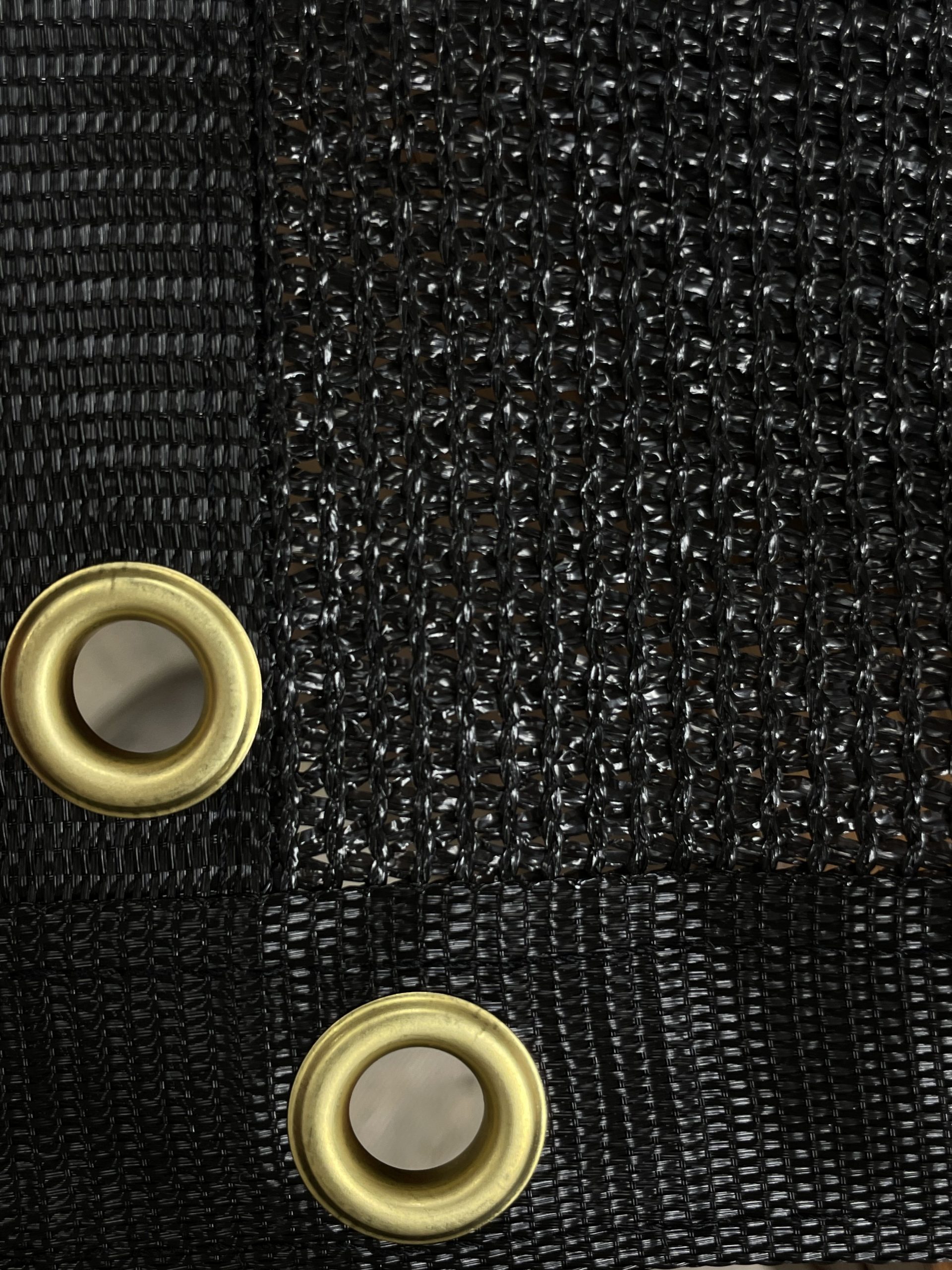
***You can order custom size shade cloth and attach it to hardware cloth frames with zip ties. This helps tremendously if your only placement options are in a full sun area of the yard. The sweet spot for providing shade yet also letting in enough light for plant growth, IME, has been 40%-50% white and aluminet shade cloth.
***Half rounds of bark, terracotta, or composite material buried at an angle into the ground also help with cooling/thermal insulation. I’ve used the Dremel EZ545 1-1/2 in. (38.1 mm) EZ Lock Diamond Wheel bit attached to a wireless Dremel tool to cut terracotta pots in half, which IMO makes them better burrows than if they were kept whole. I’ve also recently discovered hip/ridge/rake roof tiles, which are 16” in length and I think make excellent underground burrows to escape the heat. In combination with watering your enclosure in the morning, this makes cooling even more effective. A temperature gun can help confirm your temps are where you want them to be for the safety of your turtle.
***Bunches of fake plants, such as sprays of faux ivy, can be placed behind and over your half round hides to create a more shaded and secure feeling burrow for your box turtle. Real live plants are preferable in most cases but a permanent fake plant fixture is easier to place and cascade over a burrow entrance. I’ve never seen my box turtle attempt to eat a fake plant leaf, but I maybe wouldn’t recommend the same for a tortoise enclosure.
***A deep plant pot saucer, sunk into the ground with heavy flat rocks placed inside, can make a good watering bowl in which your box turtle can fully submerge yet safely enter/exit the bowl. BUT a water depth of 3” can be hazardous even for an adult if the rocks don’t reach at least halfway up the sides of the bowl. The water should also always be filled to the very top. I’d recommend placing your turtle inside the water bowl and seeing if they can easily exit on their own. I found my heavy, flat rocks lakeside and actually bought some additional oceanside rocks from Etsy. Or I’m sure a landscape company might have some too.
***If like me you don’t own a leaf mulcher, you can use a lawn mower to mulch your leftover winter leaf pile then use the clippings to scatter and amend the soil in your enclosure. Over time this helps create a loamy, friable soil as well as helps with retaining moisture in the areas of your enclosure with hides.
***It’s probably a good practice to create a higher ground level on one side of your enclosure, in case of flooding and to mound dirt to serve as the “digging” area. For me, this was most easily achieved through buying bags of organic top soil from the hardware store, as well as mixing in leftover leaf pile mulch. This area can be where you place underground hides, to create your hibernation area, shade area, sheltered area etc.
***Pavers sunk into the ground make a good dining area for your box turtle, and assuming you consistently place their meals on the paver, your box turtle will soon recognize that this is the designated place to wait to be fed. Also good to help with naturally trimming their beak.
***Purple fountain grass and turk’s cap have been two great shade-providing plants for me. Both have proven to grow well under a 50% shade cloth and grow quickly enough to provide shade for the brutal summers (though the fountain grasses need to be replaced every year as annuals). In the case of my short 2’ tall enclosure, both grow to height where they flatten at the top, which fortunately creates a sort of “umbrella” effect. Sedges are also very suited to providing cover and a sense of security for box turtles. As for groundcovers, I’ve found that common native plants like horseherb, frog fruit, ponysfoot, and dandelions are often already growing in your own yard, and can be transplanted straight into your enclosure. If you like flowers, I’ve had luck with wild violets and phlox under a 50% shade. And if grass is more your thing, then a reliable performer I’ve found under 50% shade is Seville St Augustine grass. If you’re not sure about toxicity of plants, then you can reference the https://www.thetortoisetable.org.uk/plant-database/ website to check.
***Planting a fast-growing tree on the east-facing side (which for me meant on the west side of my enclosure, which seems counterintuitive) of your enclosure can someday ensure a permanent source of overhead shade. Back in 2020 I planted a foot tall crepe myrtle, which has now grown to over 6’ and taller than the fence. I’m no arborist or botanist or even have many years of gardening experience, so I don’t have an extensive knowledge of just what trees might work for your area. I know the celeste fig tree I planted last year has more than doubled in height, so maybe that would be a good recommendation.
Whoo, so yes I just typed that all out (without using AI, yay) and I hope there’s something useful in there. I welcome any amendments, or would love to see anyone else’s enclosure glow ups, or just share their own tips. If anyone has questions or needs a link to anything I referenced, let me know. Thanks for reading/skimming, it’s all for the love of chelonians!

Outside view of the 8’ x 4’ enclosure, with 50% aluminet on the left and 50% white shade cloth on the right.

Beautiful Miss Poppy, been with the family 20 years and probably over 30 years old at this point. The queen of her domain!
***The best and most direct method I’ve found for fire ant control is by far, Advion fire ant bait. The whole colony will be wiped out in ~ 3 days if you sprinkle this on the mound. I like to cover the bait with a flower pot with a brick on top since I have a dog, though she’s never seemed interested in it. I usually place this outside the enclosure.
***You can order custom size shade cloth and attach it to hardware cloth frames with zip ties. This helps tremendously if your only placement options are in a full sun area of the yard. The sweet spot for providing shade yet also letting in enough light for plant growth, IME, has been 40%-50% white and aluminet shade cloth.
***Half rounds of bark, terracotta, or composite material buried at an angle into the ground also help with cooling/thermal insulation. I’ve used the Dremel EZ545 1-1/2 in. (38.1 mm) EZ Lock Diamond Wheel bit attached to a wireless Dremel tool to cut terracotta pots in half, which IMO makes them better burrows than if they were kept whole. I’ve also recently discovered hip/ridge/rake roof tiles, which are 16” in length and I think make excellent underground burrows to escape the heat. In combination with watering your enclosure in the morning, this makes cooling even more effective. A temperature gun can help confirm your temps are where you want them to be for the safety of your turtle.
***Bunches of fake plants, such as sprays of faux ivy, can be placed behind and over your half round hides to create a more shaded and secure feeling burrow for your box turtle. Real live plants are preferable in most cases but a permanent fake plant fixture is easier to place and cascade over a burrow entrance. I’ve never seen my box turtle attempt to eat a fake plant leaf, but I maybe wouldn’t recommend the same for a tortoise enclosure.
***A deep plant pot saucer, sunk into the ground with heavy flat rocks placed inside, can make a good watering bowl in which your box turtle can fully submerge yet safely enter/exit the bowl. BUT a water depth of 3” can be hazardous even for an adult if the rocks don’t reach at least halfway up the sides of the bowl. The water should also always be filled to the very top. I’d recommend placing your turtle inside the water bowl and seeing if they can easily exit on their own. I found my heavy, flat rocks lakeside and actually bought some additional oceanside rocks from Etsy. Or I’m sure a landscape company might have some too.
***If like me you don’t own a leaf mulcher, you can use a lawn mower to mulch your leftover winter leaf pile then use the clippings to scatter and amend the soil in your enclosure. Over time this helps create a loamy, friable soil as well as helps with retaining moisture in the areas of your enclosure with hides.
***It’s probably a good practice to create a higher ground level on one side of your enclosure, in case of flooding and to mound dirt to serve as the “digging” area. For me, this was most easily achieved through buying bags of organic top soil from the hardware store, as well as mixing in leftover leaf pile mulch. This area can be where you place underground hides, to create your hibernation area, shade area, sheltered area etc.
***Pavers sunk into the ground make a good dining area for your box turtle, and assuming you consistently place their meals on the paver, your box turtle will soon recognize that this is the designated place to wait to be fed. Also good to help with naturally trimming their beak.
***Purple fountain grass and turk’s cap have been two great shade-providing plants for me. Both have proven to grow well under a 50% shade cloth and grow quickly enough to provide shade for the brutal summers (though the fountain grasses need to be replaced every year as annuals). In the case of my short 2’ tall enclosure, both grow to height where they flatten at the top, which fortunately creates a sort of “umbrella” effect. Sedges are also very suited to providing cover and a sense of security for box turtles. As for groundcovers, I’ve found that common native plants like horseherb, frog fruit, ponysfoot, and dandelions are often already growing in your own yard, and can be transplanted straight into your enclosure. If you like flowers, I’ve had luck with wild violets and phlox under a 50% shade. And if grass is more your thing, then a reliable performer I’ve found under 50% shade is Seville St Augustine grass. If you’re not sure about toxicity of plants, then you can reference the https://www.thetortoisetable.org.uk/plant-database/ website to check.
***Planting a fast-growing tree on the east-facing side (which for me meant on the west side of my enclosure, which seems counterintuitive) of your enclosure can someday ensure a permanent source of overhead shade. Back in 2020 I planted a foot tall crepe myrtle, which has now grown to over 6’ and taller than the fence. I’m no arborist or botanist or even have many years of gardening experience, so I don’t have an extensive knowledge of just what trees might work for your area. I know the celeste fig tree I planted last year has more than doubled in height, so maybe that would be a good recommendation.
Whoo, so yes I just typed that all out (without using AI, yay) and I hope there’s something useful in there. I welcome any amendments, or would love to see anyone else’s enclosure glow ups, or just share their own tips. If anyone has questions or needs a link to anything I referenced, let me know. Thanks for reading/skimming, it’s all for the love of chelonians!
Outside view of the 8’ x 4’ enclosure, with 50% aluminet on the left and 50% white shade cloth on the right.
Beautiful Miss Poppy, been with the family 20 years and probably over 30 years old at this point. The queen of her domain!


 It was a mess that first year in 2019 but I feel like it’s finally come together…more feng shui, if you will.