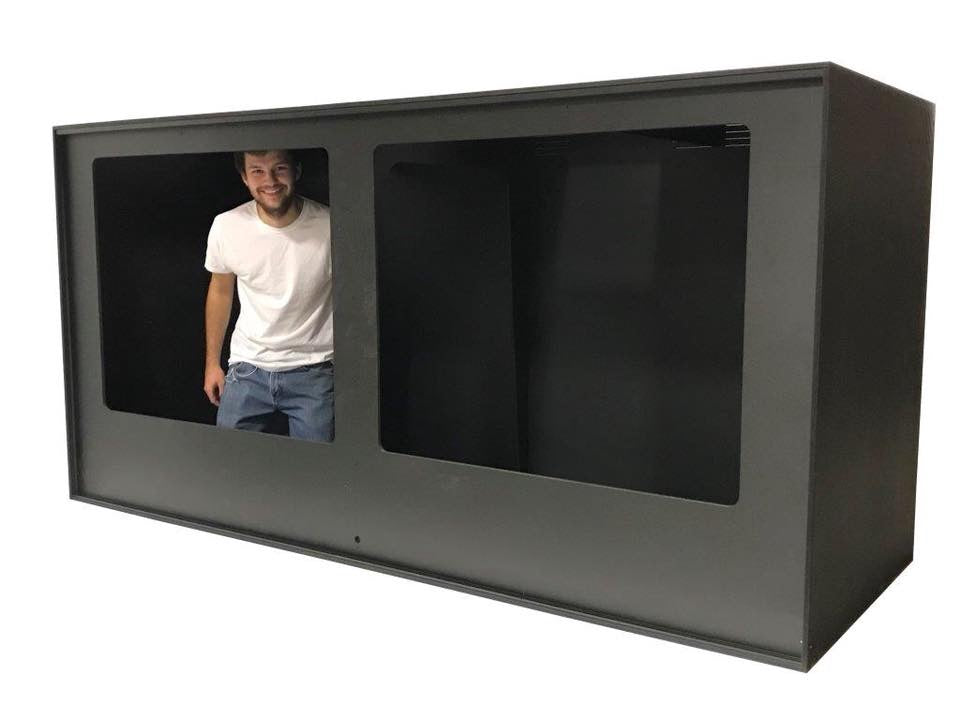
DIY Closed Chamber Enclosure

ckiley

Member
Joined
Jan 8, 2024
Messages
49
Location (City and/or State)
Crestview, FL
Hi All,
My hubby and I will be building a new/larger indoor enclosure for Charlie (sulcata). I have been attempting to explain what a closed chamber is and what we need to build it but I must admit I'm terrible at explaining things. Does anyone have any building plans or any visuals of what they've built? I'd like to build it out of wood and use plexiglass as the top (this will be indoors in a main living area so would like it to look somewhat nice, LOL). My plan is to move her outside during the day once it warms up and then still use her indoor enclosure for nighttime until we build an outdoor/heated house. Also, can anyone suggest a thermometer for regulating the temperature, I don't use one now since her current enclosure is and open top with plexiglass covering most of it but an open space for the light fixtures. Additionally, will I need additional fixtures/lighting? Currently I have 3, 2 dome fixtures- 1 for the CHE, 1 for the basking light and then a tube fixture for the UV. Any advice is always appreciated! Attaching a picture for size reference. She weighs a little over 1.5lbs and atleast 6" in length. Oh and what plants can I add to her enclosure aside from aloe and cactus?
 

Attachments

  • 20241205_062200.jpg
    20241205_062200.jpg
    2.1 MB · Views: 15

Littleredfootbigredheart

Well-Known Member
Joined
Dec 28, 2023
Messages
7,679
Location (City and/or State)
UK
Hello! So essentially a closed chamber is an enclosure that holds all the lighting and heating within the set up and every side is closed off, there’s definitely a few ways folks go about it🙂I wouldn’t let her have super long periods outdoors until she’s an inch or two bigger, she’ll benefit from longer periods in the closed chamber whilst she’s this size.

To control the temperature, you’ll need a thermostat not thermometer, it’s recommended to find one that can take double the watt you’re putting in.

Your lighting sounds good, the only additions you might need is another CHE and fixture for it if you’re getting a bigger set up.

I would also consider a different building material than wood as it doesn’t tend to last well with the high humidity, though some lining can help it last longer.

Hopefully this housing thread I made might be useful to go over, it covers correct equipment, levels, importance of a closed chamber for younger tortoises(only way to maintain the humidity you need), appropriately maintaining the humidity, substrates, there’s lots of visual examples for everything and a really handy diet link to check out! If going with a greenhouse, the lower the ceiling height, whilst still allowing for recommended bulb height, the better! (but I’ll give you a link for some different ideas too!)

This includes some different closed chamber options, bear in mind sizing for a growing sulcata, I’d go as big as you can so it’ll last until she’s ready for outdoors with a heated night box

This includes inspiration for her adult set up down the line, there’s ideas for both indoors and out

Lastly this one can be really good to go over and have on hand, it’ll help you avoid the wrong bulbs, substrates, housing etc, I always encourage double checking purchases on the forum too before buying

Hope they help!!🐢💚
 

ckiley

Member
Joined
Jan 8, 2024
Messages
49
Location (City and/or State)
Crestview, FL
Hello! So essentially a closed chamber is an enclosure that holds all the lighting and heating within the set up and every side is closed off, there’s definitely a few ways folks go about it🙂I wouldn’t let her have super long periods outdoors until she’s an inch or two bigger, she’ll benefit from longer periods in the closed chamber whilst she’s this size.

To control the temperature, you’ll need a thermostat not thermometer, it’s recommended to find one that can take double the watt you’re putting in.

Your lighting sounds good, the only additions you might need is another CHE and fixture for it if you’re getting a bigger set up.

I would also consider a different building material than wood as it doesn’t tend to last well with the high humidity, though some lining can help it last longer.

Hopefully this housing thread I made might be useful to go over, it covers correct equipment, levels, importance of a closed chamber for younger tortoises(only way to maintain the humidity you need), appropriately maintaining the humidity, substrates, there’s lots of visual examples for everything and a really handy diet link to check out! If going with a greenhouse, the lower the ceiling height, whilst still allowing for recommended bulb height, the better! (but I’ll give you a link for some different ideas too!)

This includes some different closed chamber options, bear in mind sizing for a growing sulcata, I’d go as big as you can so it’ll last until she’s ready for outdoors with a heated night box

This includes inspiration for her adult set up down the line, there’s ideas for both indoors and out

Lastly this one can be really good to go over and have on hand, it’ll help you avoid the wrong bulbs, substrates, housing etc, I always encourage double checking purchases on the forum too before buying

Hope they help!!🐢💚
Thank you, I really love the L-shape enclosure. I'm not a fan of the greenhouse inspired ones as they are not visually pleasing and the enclosure will be in a main living area in my home. I've seen where someone built an enclosure using wood and added a pond liner to the interior and then sealed the exterior with several coats of sealant. I'm attempting to build this as cost efficient as possible and have wood, plexiglass and thick plastic on hand. Do you have an example of how to install the lighting on the top? I'm assuming I could make a hinged top and then just install them to the top and make sure to measure the height appropriately but I'm a little confused as to how to install the dome lighting without compromising the closed chamber. Do you have a recommendation for a thermostat? Thank you again for all the info!!
 

Littleredfootbigredheart

Well-Known Member
Joined
Dec 28, 2023
Messages
7,679
Location (City and/or State)
UK
Thank you, I really love the L-shape enclosure. I'm not a fan of the greenhouse inspired ones as they are not visually pleasing and the enclosure will be in a main living area in my home. I've seen where someone built an enclosure using wood and added a pond liner to the interior and then sealed the exterior with several coats of sealant. I'm attempting to build this as cost efficient as possible and have wood, plexiglass and thick plastic on hand. Do you have an example of how to install the lighting on the top? I'm assuming I could make a hinged top and then just install them to the top and make sure to measure the height appropriately but I'm a little confused as to how to install the dome lighting without compromising the closed chamber. Do you have a recommendation for a thermostat? Thank you again for all the info!!
That’s completely fair enough, I encountered the same thing when it came to getting our adult red foot set up with her owner, they really didn’t like the look of a greenhouse, that coupled with the fact a few folks in the uk struggle keeping their temps up in a greenhouse when it’s bitter cold, it just wasn’t for us.
Yeah you can definitely make it last a whole lot longer with sealer and liner, I think the general consensus I’ve picked up is eventually the moisture will get to the wood. But by that time she’ll probably be ready for her adult enclosure anyway! If you have the materials already on hand, definitely go for it!😁

With mounting the lighting, there’s a few ways to go about it, but no matter what you want the heat and lighting inside, not resting on top with a gap cut out if that makes sense. To do this with the materials you’re using, I’d personally make a wooden frame, with beams running across the top where you can screw the lighting fixtures into, obviously the lower you can get that ceiling the better, but do take into consideration substrate depth with recommended lighting distance, you could definitely make this so it acts as a hinge top(just make sure there’s no gap where it meets with the base)
If wanting to play around with lowering the bulb heights in there, you could suspend the lighting using hooks and chains/clothing line

Picture something like but on the larger scale you’re making
21E05BF9-6264-4ADE-9B56-28B1E02351DE.jpeg

I’m by no means DIY savvy myself lol, but that’s the idea I’m thinking with the materials you have, I hope it makes sense and helps🥲
 

ckiley

Member
Joined
Jan 8, 2024
Messages
49
Location (City and/or State)
Crestview, FL
That’s completely fair enough, I encountered the same thing when it came to getting our adult red foot set up with her owner, they really didn’t like the look of a greenhouse, that coupled with the fact a few folks in the uk struggle keeping their temps up in a greenhouse when it’s bitter cold, it just wasn’t for us.
Yeah you can definitely make it last a whole lot longer with sealer and liner, I think the general consensus I’ve picked up is eventually the moisture will get to the wood. But by that time she’ll probably be ready for her adult enclosure anyway! If you have the materials already on hand, definitely go for it!😁

With mounting the lighting, there’s a few ways to go about it, but no matter what you want the heat and lighting inside, not resting on top with a gap cut out if that makes sense. To do this with the materials you’re using, I’d personally make a wooden frame, with beams running across the top where you can screw the lighting fixtures into, obviously the lower you can get that ceiling the better, but do take into consideration substrate depth with recommended lighting distance, you could definitely make this so it acts as a hinge top(just make sure there’s no gap where it meets with the base)
If wanting to play around with lowering the bulb heights in there, you could suspend the lighting using hooks and chains/clothing line

Picture something like but on the larger scale you’re making
View attachment 383989

I’m by no means DIY savvy myself lol, but that’s the idea I’m thinking with the materials you have, I hope it makes sense and helps🥲
That's my goal, make last longer enough until she's fully in her outdoor enclosure. Definitely want to put my money into her permanent enclosure versus a temporary so really wanting to use materials I have on hand (I mean every DIY project warrants a trip to the hardware store so I'm prepared for that LOL).
Yes, these visuals/explanations for hanging the lights make perfect sense. And then obviously I'll just need small holes for the cords- would you seal the holes after with like silicone or something or a small hole for the cords is no big deal in terms of keeping heat/humidity in?
I'm not good at the DIY stuff either, thankfully my Hubby is 😀
 

Littleredfootbigredheart

Well-Known Member
Joined
Dec 28, 2023
Messages
7,679
Location (City and/or State)
UK
That's my goal, make last longer enough until she's fully in her outdoor enclosure. Definitely want to put my money into her permanent enclosure versus a temporary so really wanting to use materials I have on hand (I mean every DIY project warrants a trip to the hardware store so I'm prepared for that LOL).
Yes, these visuals/explanations for hanging the lights make perfect sense. And then obviously I'll just need small holes for the cords- would you seal the holes after with like silicone or something or a small hole for the cords is no big deal in terms of keeping heat/humidity in?
I'm not good at the DIY stuff either, thankfully my Hubby is 😀
Yay I’m glad they made sense, I struggle explaining what I mean sometimes so it’s lucky I save loads of photos haha, some small drill holes for the leads shouldn’t hurt, but if they accidentally ended up a little bigger than intended where heat can escape, silicone is a good shout🙂
lol it’s always great having someone good with diy builds😊
 

ckiley

Member
Joined
Jan 8, 2024
Messages
49
Location (City and/or State)
Crestview, FL
Yay I’m glad they made sense, I struggle explaining what I mean sometimes so it’s lucky I save loads of photos haha, some small drill holes for the leads shouldn’t hurt, but if they accidentally ended up a little bigger than intended where heat can escape, silicone is a good shout🙂
lol it’s always great having someone good with diy builds😊
I do too, my hubby gets a little frustrated when I cant explain what I'm wanting LOL.
Perfect, we are going to start the build today. I'll post some pics when we are done. Thanks again for all the help 😊
 

Littleredfootbigredheart

Well-Known Member
Joined
Dec 28, 2023
Messages
7,679
Location (City and/or State)
UK
I do too, my hubby gets a little frustrated when I cant explain what I'm wanting LOL.
Perfect, we are going to start the build today. I'll post some pics when we are done. Thanks again for all the help 😊
No problem at all! Look forward to seeing photos!🐢💚
 

ckiley

Member
Joined
Jan 8, 2024
Messages
49
Location (City and/or State)
Crestview, FL
I do too, my hubby gets a little frustrated when I cant explain what I'm wanting LOL.
Perfect, we are going to start the build today. I'll post some pics when we are done. Thanks again for all the help 😊
Is this thermostat any good?
 

Attachments

  • Screenshot_20241214_112558_Amazon Shopping.jpg
    Screenshot_20241214_112558_Amazon Shopping.jpg
    179.7 KB · Views: 3

Tom

The Dog Trainer
10 Year Member!
Platinum Tortoise Club
Joined
Jan 9, 2010
Messages
68,467
Location (City and/or State)
Southern California
I do too, my hubby gets a little frustrated when I cant explain what I'm wanting LOL.
Perfect, we are going to start the build today. I'll post some pics when we are done. Thanks again for all the help 😊
Show hubby this. This is what you need:

If you want it to look nice and also work well, it will cost some money. Your tortoise only needs to grow another couple of inches and then you can move it outside full time with a heated shelter. Personally, I'd just throw together something around 4x8 feet using the materials you have on hand, and if it rots in a year it won't really matter because your baby will be outside by then. The link I left is a great enclosure, but only if you are going to re-use it after your tortoise outgrows it in a few months. You want front opening doors, not top opening. You want all of the heating and lighting hanging from the ceiling INSIDE the enclosure. This will easily maintain the correct temperatures and humidity and use a minimum of electricity.

Indoor plants will be eaten or trampled. Keep them potted or in hanging pots. Pothos, spider plants and Boston Ferns all tend to work well. Outdoors use fruitless mulberry trees, grape vines, hibiscus and rose of Sharon, and any other edible plants you can figure out. And grass. Lots of grass. Get grass seed from a feed store that is intended for pasture animals. Don't get grass seed at a hardware store.

Here are two examples of night boxes with safe and effective heating strategies. This is what I would invest the time and money in:


Whatever you build indoors is only going to last for another few months. This heated outdoor box in a large outdoor enclosure is where your tortoise will be living for the next few decades.
 

ckiley

Member
Joined
Jan 8, 2024
Messages
49
Location (City and/or State)
Crestview, FL
Show hubby this. This is what you need:

If you want it to look nice and also work well, it will cost some money. Your tortoise only needs to grow another couple of inches and then you can move it outside full time with a heated shelter. Personally, I'd just throw together something around 4x8 feet using the materials you have on hand, and if it rots in a year it won't really matter because your baby will be outside by then. The link I left is a great enclosure, but only if you are going to re-use it after your tortoise outgrows it in a few months. You want front opening doors, not top opening. You want all of the heating and lighting hanging from the ceiling INSIDE the enclosure. This will easily maintain the correct temperatures and humidity and use a minimum of electricity.

Indoor plants will be eaten or trampled. Keep them potted or in hanging pots. Pothos, spider plants and Boston Ferns all tend to work well. Outdoors use fruitless mulberry trees, grape vines, hibiscus and rose of Sharon, and any other edible plants you can figure out. And grass. Lots of grass. Get grass seed from a feed store that is intended for pasture animals. Don't get grass seed at a hardware store.

Here are two examples of night boxes with safe and effective heating strategies. This is what I would invest the time and money in:


Whatever you build indoors is only going to last for another few months. This heated outdoor box in a large outdoor enclosure is where your tortoise will be living for the next few decades.
That one is super nice, however we have no plans of getting another tortoise so not worth the money for us. Definitely putting something cost efficient together for temporary until she's outside full time. Will infest in the heated night box and a good/safe enclosure.
I'll check the wattage on the thermostat and will purchase one with 1000W.
Do you have an example of a front opening door on a DIY enclosure?
 

Alex and the Redfoot

Well-Known Member
Platinum Tortoise Club
Joined
Aug 21, 2023
Messages
5,310
Location (City and/or State)
Cyprus
Is this thermostat any good?
Yes, it should work (at least on paper it's rated for 10 ampers, it's 1100 watts at 110 volts). Quality can be an issue with less known brands, though. You may opt for Inkbird or BN-Link thermostats (these are chinese brands too but more field-tested).
 

Alex and the Redfoot

Well-Known Member
Platinum Tortoise Club
Joined
Aug 21, 2023
Messages
5,310
Location (City and/or State)
Cyprus
That one is super nice, however we have no plans of getting another tortoise so not worth the money for us. Definitely putting something cost efficient together for temporary until she's outside full time. Will infest in the heated night box and a good/safe enclosure.
I'll check the wattage on the thermostat and will purchase one with 1000W.
Do you have an example of a front opening door on a DIY enclosure?
You can look in this guide how to make sliding front doors: https://tortoiseforum.org/threads/b...-pvc-enclosed-chamber-–-for-beginners.159220/ (the enclosure itself is out of PVC but you need only the part with sliding glass rails).
 

Tom

The Dog Trainer
10 Year Member!
Platinum Tortoise Club
Joined
Jan 9, 2010
Messages
68,467
Location (City and/or State)
Southern California
Do you have an example of a front opening door on a DIY enclosure?
No. I stopped making those years ago because they are futile. Unless you make it out of expanded PVC sheets, it will rot and degrade in short order. It's cheaper and more sensible to simply buy the right enclosure made of the right materials. There is no practical way to seal the wood. In my case, I intend to reuse the enclosures for as long as they will last for a multitude of reptiles. In your case for a few months of use, it would make more sense to cobble something together from materials that you already have on hand and use a pond liner or other such plastic sheeting to protect the wood for the few months you will need this enclosure.

For front opening doors, you either make siding doors in tracks, or you make hinged doors that swing open.

That one is super nice, however we have no plans of getting another tortoise so not worth the money for us.
I showed that enclosure as an example to show your husband what you need. I wasn't suggesting you buy one. You said you weren't able to explain it well, so I gave you a picture of what you need to show him.
 

ckiley

Member
Joined
Jan 8, 2024
Messages
49
Location (City and/or State)
Crestview, FL
No. I stopped making those years ago because they are futile. Unless you make it out of expanded PVC sheets, it will rot and degrade in short order. It's cheaper and more sensible to simply buy the right enclosure made of the right materials. There is no practical way to seal the wood. In my case, I intend to reuse the enclosures for as long as they will last for a multitude of reptiles. In your case for a few months of use, it would make more sense to cobble something together from materials that you already have on hand and use a pond liner or other such plastic sheeting to protect the wood for the few months you will need this enclosure.

For front opening doors, you either make siding doors in tracks, or you make hinged doors that swing open.


I showed that enclosure as an example to show your husband what you need. I wasn't suggesting you buy one. You said you weren't able to explain it well, so I gave you a picture of what you need to show him.
Gotcha, we are in the process of putting it together now. Still haven't decided on the access point, either something up top and seal it the best we can our a side door. Anything is better than what we are using now and gives Charlie 3 times the space so it'll work for the next several months.
Thanks for your help/advice.
 

ckiley

Member
Joined
Jan 8, 2024
Messages
49
Location (City and/or State)
Crestview, FL
Hi All,
We finally finished the DIY closed chamber enclosure, the holidays and weather made this project go on alot longer than anticipated. The humidity is at 99%, ambient temp sitting at 80 ( I have 2 temp/humidity gauges on opposite sides of the enclosure and the CHE is hooked up to a thermostat), its about 98 under the basking light. Can humidity be too high?
 

Attachments

  • 20250113_140402.jpg
    20250113_140402.jpg
    2.2 MB · Views: 11
  • 20250113_140355.jpg
    20250113_140355.jpg
    1.9 MB · Views: 12
Top