
Littleredfootbigredheart
Well-Known Member
Howdy folks! Hope everyone is well! As you all know, I’m a big fan of making threads that cater more towards visual learners like myself, I’ve really been wanting to create a thread full of adult enclosure inspiration for a while now, I’ve managed to find some great references over time! I do love looking through different set ups, so I hope people enjoy looking through this as much as I enjoyed making it!
If you’re reading this years after this threads creation, do feel free to keep browsing the comments! I’d love to keep adding to it and have folks share their own!
*disclaimer* some of these photos may include things in the enclosures that aren’t recommended, I’ve left the odd comment where possible to avoid confusion, but there were too many to have no missed some.
These are more to serve as a visual aid, not as strict advice for how to set up.
Please also be aware for the indoor examples, that not all of them will have the correct heating/lighting in shot, again it’s up to the reader as the keeper to apply the correct lighting, heating, plants etc to your individual species, same goes for safety of the animal, make adjustments accordingly.
**none of these photos are my enclosures, if you’d like to see our set up though, do ask!**
To learn more about specifics on what not to add into set ups(this does mainly permit to indoor set ups but there’s definitely some that still apply all round), please check out this thread:
 tortoiseforum.org
To see some visuals on how to house babies/young torts, please check this thread out:
tortoiseforum.org
To learn more on heating and lighting indoors for individual species, feel free to check out the care sheets I have pinned on my profile(click my photo, then click the username, scroll down to find the links)
All that aside, let’s get into it!
When building your enclosure you have to bear in mind your location, to be able to house according to your climate. Outdoors will only work year round if temperatures and humidity are where they need to be for whatever species you plan to get.
For indoor enclosures, the main things to bear in mind are:
Indoor for smaller species

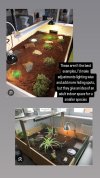
Multi levels

‘L’/different shaped enclosures
Dedicated room enclosures

Sheds/outbuildings


To heat larger indoor areas like this I believe you’d need to look into oil heaters and RHP’s, if interested in this kind of thing, definitely do reach out to some of the more experienced members for the logistics.
Oil heaters

Now let’s talk outdoors! It goes without saying there’s truly nothing more optimal than a secure outdoor enclosure in a suitable climate for your tortoise when possible.
When building a safe outdoor space, there are some important things to think about:
Climate- Both temperature&humidity
Being escape proof- Both climbing and digging!

A few ways to dig proof:


Heated night box/controlled heat area


To learn more on how to build a heated night box, please check out these threads:
tortoiseforum.org
tortoiseforum.org
Deep shade


Burrows

To learn more, check out this thread:
tortoiseforum.org
Visual barriers

Being predator proof! This is achieved in a variety of ways, some of which you’ll see when scrolling
Wooden boarders/fencing/flowerbeds


Continued in comments!!
If you’re reading this years after this threads creation, do feel free to keep browsing the comments! I’d love to keep adding to it and have folks share their own!
*disclaimer* some of these photos may include things in the enclosures that aren’t recommended, I’ve left the odd comment where possible to avoid confusion, but there were too many to have no missed some.
These are more to serve as a visual aid, not as strict advice for how to set up.
Please also be aware for the indoor examples, that not all of them will have the correct heating/lighting in shot, again it’s up to the reader as the keeper to apply the correct lighting, heating, plants etc to your individual species, same goes for safety of the animal, make adjustments accordingly.
**none of these photos are my enclosures, if you’d like to see our set up though, do ask!**
To learn more about specifics on what not to add into set ups(this does mainly permit to indoor set ups but there’s definitely some that still apply all round), please check out this thread:
Common keeping errors
Hello everyone! I’d been a long time lurker on this site long before joining just under a year ago now, over that time I’ve seen these husbandry issues come up time and time again, sometimes with dire consequences☹️ I thought this thread might serve as a good visual guide for these common...
tortoiseforum.org
To see some visuals on how to house babies/young torts, please check this thread out:
Visual inspiration
Hi guys! I’ve had some lovely messages complimenting me on my care sheets I made for all the visuals they include! That makes me so happy because as a visual learner myself, that was my goal🥰 I’ve recently had some requests for some more visual inspiration for set ups that can house babies/...
tortoiseforum.org
To learn more on heating and lighting indoors for individual species, feel free to check out the care sheets I have pinned on my profile(click my photo, then click the username, scroll down to find the links)
All that aside, let’s get into it!
When building your enclosure you have to bear in mind your location, to be able to house according to your climate. Outdoors will only work year round if temperatures and humidity are where they need to be for whatever species you plan to get.
For indoor enclosures, the main things to bear in mind are:
- Heating for your individual species
- Lighting(ambient&UV) and timers!
- Humidity, if you plan to keep something like a red foot in a drier climate, an open top won’t be appropriate, it’d be hard to achieve indoors period.
- Safe water dish-clay terracotta saucers are recommended
- Large feeding slate/clay saucer
- Hides/burrows/plant coverage, it’s good to create visual barriers to encourage them to explore.
- Sizing for your particular species! This is very important as many people struggle proving enough room indoors, even the smallest of species like a Russian need around 8x4foot space minimum. Larger species need whole rooms/out buildings, even they won’t work year round for some depending on species
- If open top, make it climb proof by either high sides, a lip around the top edge and corner caps!
Indoor for smaller species
Multi levels
‘L’/different shaped enclosures
Dedicated room enclosures
Sheds/outbuildings
To heat larger indoor areas like this I believe you’d need to look into oil heaters and RHP’s, if interested in this kind of thing, definitely do reach out to some of the more experienced members for the logistics.
Oil heaters
Now let’s talk outdoors! It goes without saying there’s truly nothing more optimal than a secure outdoor enclosure in a suitable climate for your tortoise when possible.
When building a safe outdoor space, there are some important things to think about:
Climate- Both temperature&humidity
Being escape proof- Both climbing and digging!
A few ways to dig proof:
- Buried cinder blocks
- laying down hardware cloth or chicken wire, then placing what ever broader type you use on the edge, in a year or two grass and plants should cover it

Heated night box/controlled heat area
To learn more on how to build a heated night box, please check out these threads:
Single Tortoise Night Box
I like my larger tortoises to live outside full time. My climate permits this year round with a little help. For people who live where it snows all winter, this type of box is still good for warmer weather, getting them out earlier in Spring, and keeping them out a bit later into fall. You'll...
tortoiseforum.org
Double Door Night Box
As the years have gone by and I build more of these boxes, I learn more and more each time. This one is the latest and I incorporated everything I've learned over the years. I also tried to take lots of pics so I can explain in more detail some of what is going on. It will take multiple posts to...
tortoiseforum.org
Deep shade
Burrows
To learn more, check out this thread:
The importance of DEEP shade
Ok, folks, we need to talk about SHADE. You have probably (hopefully) heard tortoise keepers talking about the fact that tortoises need "DEEP SHADE" to retreat into on a hot Summer day (really any day that has air temps above 80 degrees). What do we mean by "deep shade?" - this is NOT...
tortoiseforum.org
Visual barriers
Being predator proof! This is achieved in a variety of ways, some of which you’ll see when scrolling
Wooden boarders/fencing/flowerbeds
Continued in comments!!


 the two post we have about it will suffice, a long with common sense and it's pretty gross.


 they’re so impressive!!


