Grama tort
New Member
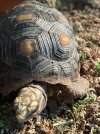
I am a new tortoise Gramma, he was given to us and we have just had him a few months. Some days he is very active and eats like crazy and then will barely move and not eat for the next day. Is this normal.


Hello and welcome!I am a new tortoise Gramma, he was given to us and we have just had him a few months. Some days he is very active and eats like crazy and then will barely move and not eat for the next day. Is this normal.
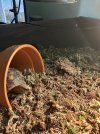
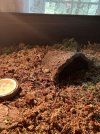
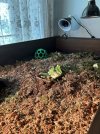
We think he is about 4 years old. I just fixed him a new enclosure that is 2 1/2 feet x6 feet, I used a base of organic soil and washed sand with tortoise bio soil, bark and moss on the top. He had two different hides temp at around 80. Humidity at around 75. He has 1 basking light and 1 uvb light. I feed him tortoise diet pellets moistened, different greens, zucchini, and fruit. I limit the fruit. Fresh water. I only soak him about 3 times a week. He acts like he can’t wait to get out. Hope that gives enough information.Hello and welcome to the forum!
Do you know roughly how old your red foot is? Are we talking an adult or hatchling?
Some more in information on how they’re kept would be helpful with advising, typically they should be eating something everyday.
Any answers to the following questions would be great! Don’t worry if you can’t answer all of them.
What are your ground temps in your enclosure?
What kind of lighting/heating are you using? Packaging photos are good if you have any.
Do you use indoor uv? If so, what kind?
What’s your humidity reading? What do you use for substrate?
What kind of things have you been feeding?
Do you give regular soaks?
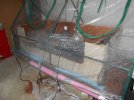
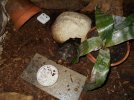
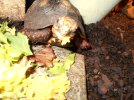
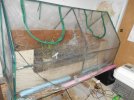
A photo of your full set up would be really good! Along with a picture of your tort
He ate a bunch of zucchini and pellets and greens the day before. Maybe that’s his problem! I wish I could read his mind!Hello and welcome!
I've seen such behaviour after feeding some "heavy foods" with my redfoot - she was less active next day after gorging on mushrooms, boiled meat or eggs. I presume she reduces activity to extract as much nutrients as possible from such foods (or maybe they need more time to be digested).


 tortoiseforum.org
There are a few things that need addressing to help them thrive in your care. Unless you’re in a climate that allows them to be outdoors most of the year, they are going to need a bigger indoor set up, these guys need a very large area to roam, it’s vital for their health.We think he is about 4 years old. I just fixed him a new enclosure that is 2 1/2 feet x6 feet, I used a base of organic soil and washed sand with tortoise bio soil, bark and moss on the top. He had two different hides temp at around 80. Humidity at around 75. He has 1 basking light and 1 uvb light. I feed him tortoise diet pellets moistened, different greens, zucchini, and fruit. I limit the fruit. Fresh water. I only soak him about 3 times a week. He acts like he can’t wait to get out. Hope that gives enough information.
 tortoiseforum.org
tortoiseforum.org
tortoiseforum.org


I have gotten pieces of plexiglass to put over with the humidifier running constantlyI agree with Maggie, in dryer climates closed chambers are recommended for redfoots of all ages
There are a few things that need addressing to help them thrive in your care. Unless you’re in a climate that allows them to be outdoors most of the year, they are going to need a bigger indoor set up, these guys need a very large area to roam, it’s vital for their health.
Substrate will need changing up, trouble with top soils, is unless you’ve composted it yourself, there’s no telling what plants have gone into it, could be something toxic. As mentioned above sand is an impaction risk as well as an irritant. Moss is an impaction risk too. Safe options are orchid bark or forest floor, you can use coco coir as a base.
For their high humidity needs, they ideally needs to be in a closed chamber. They need 80 or higher, which won’t be possible to maintain 24/7 with an open top. Adults can cope with lower, but they definitely thrive when it’s higher.
UVB bulb looks to be a compact one which aren’t appropriate, you want a t5 tube fluorescent bulb, Arcadia is the best on the market but there’s also zoo med.
I think you’d find it better sticking with CHE’s as your heat source(ceramic heat emitters) I’ll go more into that below.
Diet wise, don’t worry about limiting fruit too much! These guys are fruit eaters, it makes up a good amount of their diet, you can mix up the ratios, so one day it could be 40% fruit, other days it could be 60! They also need a small amount of protein each week
3 times a week is fine for soaks, a lot of them get fussy, don’t worry about it, it actually makes for good exercise, gets them moving which usually helps them poop during the soak lol.
I think you’ll find this thread I made super useful to read, I go over equipment like the uv and the ceramic bulbs I mentioned, levels, maintaining humidity and there’s a great diet list too!
Housing older red foot/cherryhead
Hello there! In this thread I’m going to go over an example of an appropriate indoor red foot/cherryhead enclosure. As much as it’s encouraged to have tortoises in a safe outdoor enclosure(especially the size these guys get!) I understand being from the uk myself, that some climate’s make it...
This thread will also be helpful for you to avoid the wrong types of equipment and materials etc moving forward
Common keeping errors
Hello everyone! I’d been a long time lurker on this site long before joining just under a year ago now, over that time I’ve seen these husbandry issues come up time and time again, sometimes with dire consequences☹️ I thought this thread might serve as a good visual guide for these common...
Give them both a read, and feel free to come back with any questions!
Humidifiers can cause respiratory problems as it’s not good for them to constantly be breathing in water droplets, humidifiers also don’t give a chance for the top layer of substrate to dry out a bit, red foots are prone to fungal infectionsI have gotten pieces of plexiglass to put over with the humidifier running constantly
So what do I use for humidity?Humidifiers can cause respiratory problems as it’s not good for them to constantly be breathing in water droplets, humidifiers also don’t give a chance for the top layer of substrate to dry out a bit, red foots are prone to fungal infections
I would still definitely suggest replacing the soil and sand, even if it’s sterile it doesn’t eliminate the potential toxicity issue. Sand can still be a problem too.I have used sterile soil and the sand is very minimal, but above that is about 4 inches of bio substrate, first floor and bark, I sprinkled some moss on top but I will pull that out. I’m not sure about the pellets as to how much I should give him. Thank you for all your great information
To maintain humidity, you want to focus more on the bottom layers being nice and damp, to do this, pour some Lukewarm water into the corners of the substrate, the water will disperse all underneath. If using a coir base, they usually come in dried bricks, soak in water(check quantities on packet) until it’s all soft and crumbly, it should somewhat hold its shape when squished in a fist and you’ll see if there’s too much water. Pack all that down firmly by hand(if left loose it can dry faster) and place a few inches of orchid bark on top.So what do I use for humidity?