Pyramiding Experiment

Morlas Mama

Member
Joined
Dec 5, 2014
Messages
71
Location (City and/or State)
NW Indiana
I have been reading through the forums about pyramiding; the basic do's and don't and the overall debate on causes.

Working in academics, I go immediately in search of scholarly articles and research relating to this topic. I wanted to share an article, very specific to the "Influence of environmental humidity and dietary protein on pyramidal growth of carapaces in African spurred tortoises (Geochelone sulcata)" I had access to.

I read an interesting thread from a few years ago written by @Tom beginning an experiment similar to this one. I hope @Tom will find this experiment helpful and offer his expertise about this subject as will other TFO members.

The experiment was conducted at the Institute of Nutrition, University of Veterinary Medicine in Vienna, Austria. I hope I attached the file correctly so everyone can read and share their thoughts. Also, I have access to scholarly libraries around the world. If anyone is interested in something specific that is not easily found using the Internet, I will be more than happy to search through my academic resources for you.
 

Attachments

  • Influence of environmental humidity and dietary protein on pyramidal growth.pdf
    186.9 KB · Views: 42

Maro2Bear

Well-Known Member
10 Year Member!
Joined
May 29, 2014
Messages
14,902
Location (City and/or State)
Glenn Dale, Maryland, USA
MM

Thanks for the article, pretty clearly confirms that sulcatas require high humidity conditions to prevent pyramiding. As the article summarizes,
  • in order to keep the development of PGS (pyramiding growth syndrome) to a minimum, areas with a relative humidity of nearly 100% for hiding should be provided to the tortoises at all times.
 

Prairie Mom

Well-Known Member
Joined
Sep 13, 2014
Messages
4,333
MM

Thanks for the article, pretty clearly confirms that sulcatas require high humidity conditions to prevent pyramiding. As the article summarizes,
  • in order to keep the development of PGS (pyramiding growth syndrome) to a minimum, areas with a relative humidity of nearly 100% for hiding should be provided to the tortoises at all times.
100% in the hide!?!?...Man, I have work to do! -The things we do for love, right?:)
 

Morlas Mama

Member
Joined
Dec 5, 2014
Messages
71
Location (City and/or State)
NW Indiana
Nearly 100%. At 100% you'd have rain.
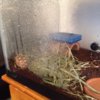
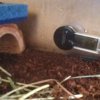
My habitat stays at 99-100% near the hides. There is a build up of moisture on the tank walls. I thought I saw a little rain cloud forming but it went away ;)

Seriously though, if you think about how they burrow into the wild, their entire shells are surrounded if not covered in damp ground. Born in the rainy season, probably VERY damp ground.
image.jpg image.jpg
 

Yellow Turtle01

Well-Known Member
5 Year Member
Joined
Jun 12, 2013
Messages
7,691
Location (City and/or State)
OH, USA
What a great article! Really informing and it proves sulcata's NEED humidity!
Thank you! :D
 

GardiendeKoopa

New Member
Joined
Apr 19, 2026
Messages
29
Location (City and/or State)
Toronto, Ontario
It’s nice for there to be scientific literature to back up the tortoise care guides on this forum because a lot of veterinarians and zoos will only adopt practices with published scientific evidence.

“The results presented indicate that the level of dietary protein is probably not the main cause of PGS, except that it may predispose the tortoise to more rapid growth. As previously mentioned, faster growing tortoises can provoke the erroneous impression of forming bigger humps. This might explain the widespread belief that faster growing tortoises produce bigger humps. Even if there is no connection between dietary protein level and degree of PGS, keeping the level of dietary protein in tortoise diets low might still be useful because of other protein-related diseases, such as gout. The decisive conclusion from this study is that, in order to reduce the incidence of PGS in growing tortoises, one needs to provide a sufficient level of environmental humidity. In particular, in order to keep the development of PGS to a minimum, areas with a relative humidity of nearly 100% for hiding should be provided to the tortoises at all times.”

If this is the case with sulcatas, a desert species, then it is reasonable to imagine that species from climates with more moisture wouldn’t require any less humidity.
 

Tom

The Dog Trainer
10 Year Member!
Platinum Tortoise Club
Joined
Jan 9, 2010
Messages
68,423
Location (City and/or State)
Southern California
It’s nice for there to be scientific literature to back up the tortoise care guides on this forum because a lot of veterinarians and zoos will only adopt practices with published scientific evidence.

“The results presented indicate that the level of dietary protein is probably not the main cause of PGS, except that it may predispose the tortoise to more rapid growth. As previously mentioned, faster growing tortoises can provoke the erroneous impression of forming bigger humps. This might explain the widespread belief that faster growing tortoises produce bigger humps. Even if there is no connection between dietary protein level and degree of PGS, keeping the level of dietary protein in tortoise diets low might still be useful because of other protein-related diseases, such as gout. The decisive conclusion from this study is that, in order to reduce the incidence of PGS in growing tortoises, one needs to provide a sufficient level of environmental humidity. In particular, in order to keep the development of PGS to a minimum, areas with a relative humidity of nearly 100% for hiding should be provided to the tortoises at all times.”

If this is the case with sulcatas, a desert species, then it is reasonable to imagine that species from climates with more moisture wouldn’t require any less humidity.
Agreed about other species also needing humid hides. One note for you: Sulcatas are NOT a desert species. They come from grassland areas and forest edge areas. It takes a lot of annual rainfall to sustain forests and grasslands. Their range is arid for part of every year, but it also has a 3-4 month monsoon season annually. My friend from Senegal that studies them in the wild says that the humidity during monsoon season makes a South Florida summer seem dry in comparison. I don't see how that is possible, but that's what he said. I've been to South FL in summer, but I've never been to Senegal in sulcata territory during monsoon season.

Also, this thread is 14 years old... Just sayin'... :)
 

New Posts

Top